
In a world that measures success through targets, titles and tangible outcomes, it is easy to assume that happiness is something we achieve once we have ticked enough boxes or earned enough money.
I must admit that I do get a kick out of ticking boxes! But I have come to see there is another way of thinking about living a good life.
I thought by blending various core learnings and experiences that I had discovered what ‘meaning in life’ was all about. Then I found someone had beaten me to it (by a mere 1,700 years!!)
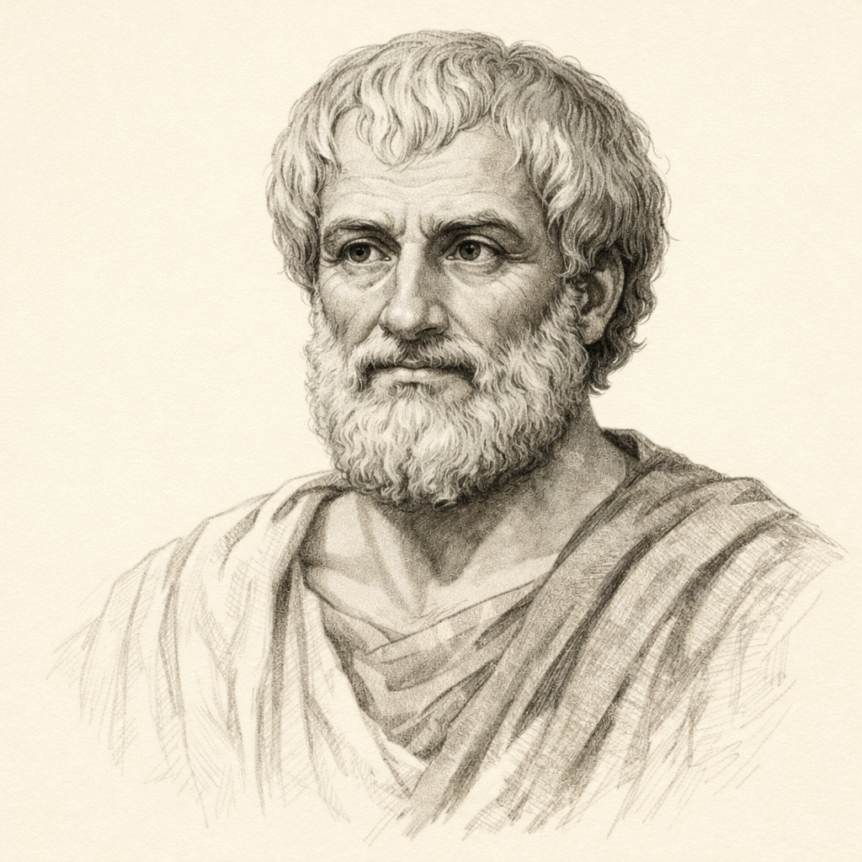
The ancient Greek philosopher Aristotle used the word eudaimonia to describe what we recognise today as human flourishing. Eudaimonia is about understanding who you truly are. It’s about living in alignment with your deeper values, strengths and inner wisdom.
This last sentence sends shivers down my spine because that is exactly what sits at the heart of my coaching philosophy. It also fits seamlessly with my preferred definition of success, for which I credit Maya Angelou: “To like who you are, like what you do and like how you do it.”
The teachers who come to me for help and support with their careers are accomplished, capable and outwardly successful. On paper, everything looks fine. And yet something feels off. They describe feeling restless, quietly unfulfilled, or unsure what the next chapter should hold. Some are considering promotion. Some are contemplating leaving the classroom. Others simply want to feel like themselves again. Most usually talk about the uncertainty they are experiencing or the crossroads they have reached.
This is rarely a problem of competence. It is more often a question of alignment.
Through eudaimonic wellbeing, Aristotle invites us to ask questions such as:
- What kind of person do I want to be?
- What feels deeply meaningful to me?
- Where am I living in accordance with that?
- Where am I not in accordance with that?
In my work, I help teachers not only navigate their careers but to answer the ‘big’ questions. I’ve had clients gain the sought after promotion, switch roles within the education sector, and transition out of teaching and in doing so we’ve travelled the twin trail of the doing (the outer goal-oriented work) and the being (the inner work of re-connecting with who they really are).
At times, I have found the inner path difficult to follow, but what I’ve realised is that slowing down and re-connecting with the true self allows for clarity and our wisdom to reveal itself. Magically, decisions then feel easier to make and action more inspiring to take.
This doesn’t mean abandoning ambition and making do with the status quo. It means grounding ambition in something more enduring than fear, comparison or external validation. It means allowing ambition and progress to come from a place of purpose.
It seems that eudaimonic living is not about whole scale reinvention but discovering what’s already within us, in other words, our true self. We do that by listening more carefully to our own thinking (but not believing everything we think!); trusting our innate clarity; and allowing confidence to grow from the inside out rather than the outside in.
When teachers begin to operate from this place, something shifts. Whether they stay in education or move on, they do so with greater confidence, a stronger sense of direction, and a deep feeling of alignment.
Photo: AI generated.